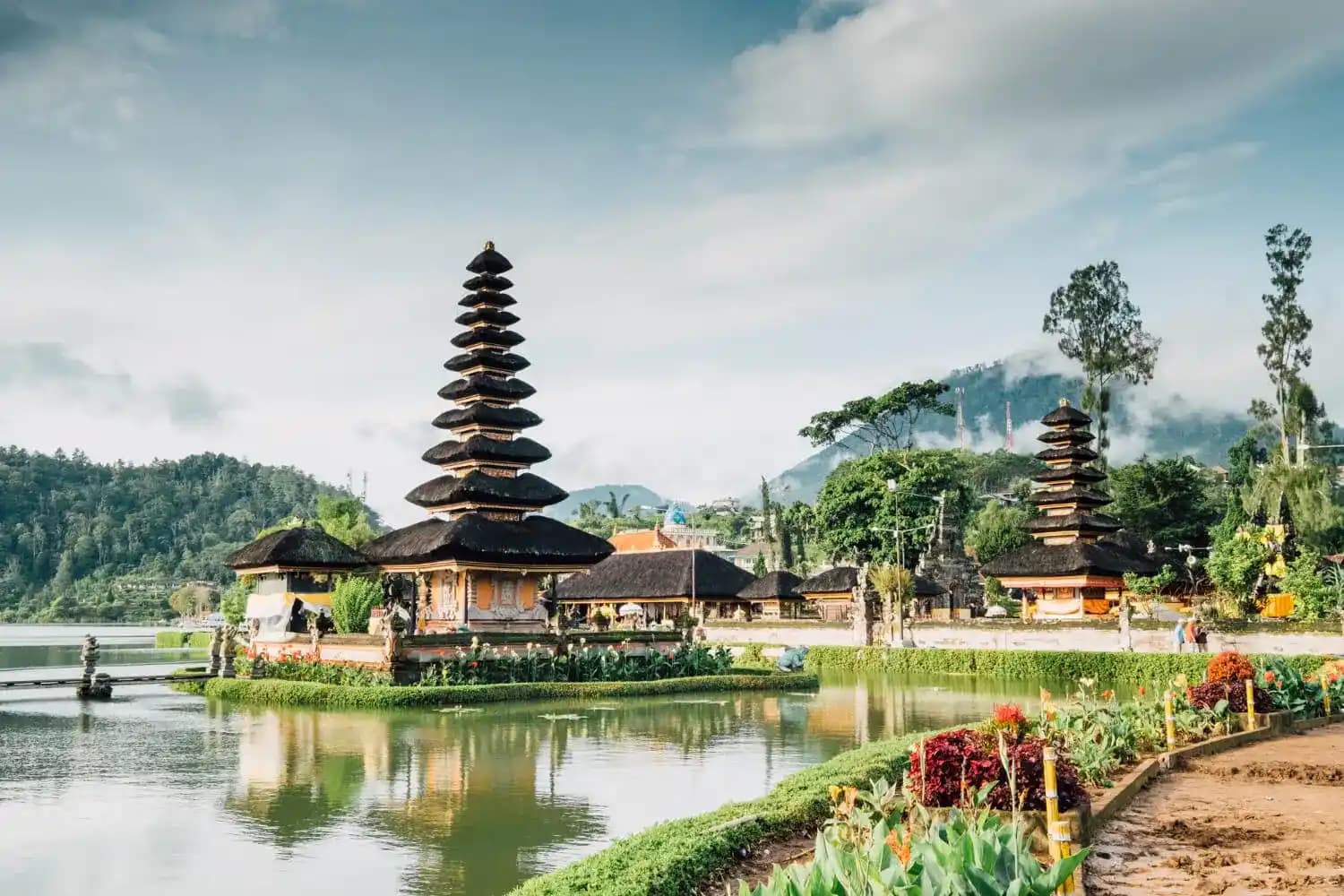

Bhutan SDF & Tour Operator Policy: Why It Costs USD 100/Night & What It For
Can I travel to Bhutan independently? And what exactly is that USD 100 per person per night "Sustainable Development Fee" for? These are the two most common questions Tweet World Travel receives about Bhutan — and the answers reveal why Bhutan is the world's most unusual travel destination. This guide explains the country's tour-operator policy, breaks down what the SDF actually funds, and gives concrete examples of where the money goes. By the end, you'll understand exactly why Bhutan costs what it does — and why most travellers who visit say it's the best value travel they've ever had.
Explore Tweet World Travel Bhutan Small Group Tour or contact Tweet World Travel for a tailor-made travel experience.

Why Bhutan Tourism is Different from Anywhere Else
Bhutan is the only country in the world that measures national success by Gross National Happiness (GNH) rather than Gross Domestic Product (GDP). Tourism in Bhutan was opened to foreign visitors only in 1974, and from day one the country chose a "High Value, Low Volume" policy — quality over quantity, cultural protection over mass tourism. Where every other country tries to attract as many visitors as possible, Bhutan deliberately limits foreign tourist numbers to protect its environment, culture and traditional way of life.
This is why Bhutan has no McDonald's, no Starbucks, no traffic lights in the capital, no foreign chain hotels in remote areas, and 70% forest cover (one of the highest in Asia). It is also the world's only carbon-negative country — Bhutan absorbs three times more CO₂ than it emits. The tourism policy is the tool that has protected all of this.
Quick facts on Bhutan tourism:
Tourism opened to foreigners: 1974
Annual visitor cap (informal): around 300,000 — vs Nepal's 1 million+ and Thailand's 40 million
Foreign tourists allowed to travel independently: No — only Indian, Bangladeshi and Maldivian nationals can self-organise
Sustainable Development Fee (SDF): USD 100 per adult per night (2023 reduction from USD 200)
What "High Value, Low Volume" means: higher per-visitor fees, fewer visitors, deeper visitor experience, more government revenue for conservation
Can I Travel to Bhutan Independently?
Yes — since the 2022 tourism reforms, foreign travellers can now apply for a Bhutan visa directly themselves through the official portal at bhutan.travel. You no longer need to book through a Bhutanese tour operator to obtain your visa.
That said, almost all international visitors still travel with a licensed Bhutanese guide. Three core reasons make a tour operator strongly recommended:
Guides remain mandatory for travel outside the main entry-points — while the visa rules are relaxed, a licensed Bhutanese guide is still required for travel outside Thimphu and Paro and at all dzongs, monasteries and trekking routes.
Quality control: all guides are government-certified, speak English fluently, know the cultural protocols, and ensure visitors experience Bhutan respectfully.
Cultural protection: guides ensure visitors dress appropriately at dzongs and temples, don't photograph what they shouldn't, and understand Bhutanese etiquette.
Logistics & safety: Bhutan's mountain roads are challenging; experienced local drivers know the conditions and protocols. Tour operators arrange accommodation, transfers and bookings far more efficiently than self-arranging.
Special arrangements for regional neighbours:
Indian passport holders — do not need a visa at all. Indian nationals obtain a free entry permit (online at bhutan.travel or on arrival) and pay a reduced SDF of INR 1,200 (~USD 15) per person per night. Indians can travel independently within Bhutan, though a guide is still recommended for the deeper cultural experience.
Bangladeshi and Maldivian nationals — apply for a permit/visa with a reduced SDF (INR 1,200 per night) and can travel independently within Bhutan.
Diplomatic, official and UN passport holders — visa-exempt and may travel under separate protocols.
Bottom line: the visa process is now self-service via the official bhutan.travel portal, but in practice the vast majority of international visitors still book through a Bhutanese-registered tour operator (or a partner operator such as Tweet World Travel) because of the guide requirement, quality, and ease of logistics. Indian passport holders enjoy the simplest entry — just a free permit.

What is the Sustainable Development Fee (SDF)?
The Sustainable Development Fee — SDF — is a daily levy paid by every foreign tourist visiting Bhutan. It was previously bundled inside the "Minimum Daily Package Rate" of USD 200–250 per person per night; in September 2022 the Bhutanese government separated the SDF as a clear, transparent fee.
Current SDF rates (as of 2024):
- Foreign tourists: USD 100 per adult per night (reduced from USD 200 in 2023; the reduction has been extended through 2027)
- Children aged 6–12: USD 50 per night (50% discount)
- Children under 6: no SDF charge
- Indian, Bangladeshi & Maldivian nationals: INR 1,200 per adult per night
Important: the SDF is not the only cost of visiting Bhutan. You also pay for accommodation, meals, transport, your tour guide, entry fees and your visa (USD 40 one-time). A typical premium 7-night Bhutan tour through Tweet World Travel costs USD 350–650 per person per night all-in, of which USD 100 is the SDF and the rest covers your hotel, private guide, private driver, all transport, all entry fees, all meals and your support of a Bhutanese-employed travel team.

What Does the SDF Actually Pay For?
Unlike taxes in most countries that disappear into general government budgets, every dollar of Bhutan's SDF is earmarked by law for specific public-benefit programmes. Here's where your USD 100/night actually goes:
Free healthcare for every Bhutanese citizen — Bhutan provides universal free healthcare including hospitals, doctors, surgeries, medicines, dental care and mental health support. There is no insurance system because none is needed.
Free education through high school — all Bhutanese children receive free schooling from primary through grade 12. The government also provides free university scholarships for top students.
Environmental conservation — Bhutan's constitution mandates that 60% of the country must remain forested forever (current figure: 70%). SDF funds national park management, anti-poaching patrols, tiger and snow leopard conservation, and reforestation programmes.
Cultural preservation — restoration of dzongs (fortress-monasteries), monastic schools, traditional arts and crafts apprenticeships, and Dzongkha language preservation.
Infrastructure for remote communities — rural electrification, road construction to remote villages, drinking-water projects, agricultural improvement programmes.
Sustainable tourism programmes — guide training, eco-trail development (e.g. the new 403 km Trans-Bhutan Trail reopened in 2022), tourism safety, and visitor-impact studies.
Carbon-negative initiatives — Bhutan absorbs 3x more CO₂ than it emits; SDF funds hydroelectric expansion, electric-vehicle subsidies and the country's zero-emission target.
Real Examples of Where the SDF Money Has Gone
Some concrete examples of what Bhutanese tourists have already funded through the SDF over the past two decades:
Punakha Dzong restoration (2003–2013) — USD 4 million reconstruction of the country's most beautiful 17th-century dzong after major fires, partly funded by tourism SDF.
Bhutan's Gross National Happiness Index — one of the world's most cited measures of national wellbeing; the GNH Centre and ongoing surveys are partly tourism-funded.
Royal University of Bhutan scholarships — over 5,000 Bhutanese university students have received tourism-SDF-funded scholarships.
National healthcare expansion — two new hospitals opened in Punakha and Wangdue Phodrang in the 2010s with SDF contribution.
Trans-Bhutan Trail reopening (2022) — the 403 km ancient pilgrim trail running the length of the country was restored using SDF funds.
Tiger conservation — Bhutan's tiger population grew from 75 (2015) to 131 (2023) — SDF funds anti-poaching patrols, camera-trap monitoring and habitat protection.
Mask Dance Festival preservation — the great Tshechu festivals at Paro, Thimphu and Punakha receive SDF support for costume restoration and monastic dance training.
Snow Leopard protection programmes — 40+ snow leopards now confirmed in northern Bhutan; SDF funds monitoring and herder-compensation programmes.

What's Included When You Book Bhutan
When you book a Bhutan tour through Tweet World Travel, your daily rate covers:
- The Sustainable Development Fee (USD 100/adult/night)
- All accommodation in licensed Bhutanese hotels and resorts
- All three daily meals — breakfast, lunch and dinner
- Private licensed English-speaking guide for the duration of your visit
- Private vehicle and driver (cars, vans or SUVs depending on group size)
- All entry fees to dzongs, museums, monasteries and historical sites
- All road tolls, parking and permits
- Mineral water during transfers and tours
- The one-time visa fee
What's NOT included:
- International flights to/from Paro (typically via Bangkok, Delhi, Kathmandu or Singapore)
- Alcoholic beverages and snacks outside meals
- Premium-room upgrades (Aman, Six Senses, COMO Uma) above standard tour hotels
- Personal expenses — laundry, phone calls, souvenirs
- Tipping for guide and driver (recommended USD 10/day each)
- Travel insurance (strongly recommended)
Why "High Value, Low Volume" Works — Evidence
Critics of Bhutan's SDF often argue it makes the country unaffordable. The data, however, suggests the opposite: that the policy produces the world's best-protected tourism destination.
Bhutan has 70% forest cover — highest in Asia. Compare to neighbouring countries that have lost 30–50% of forest to mass tourism.
Bhutan is the world's only carbon-negative country — no other country absorbs more CO₂ than it emits.
Visitor satisfaction surveys consistently rank Bhutan in the top 3 destinations globally — often above Iceland, Japan and New Zealand for quality of cultural experience.
Cultural authenticity preserved — 99% of Bhutanese still wear traditional dress (gho and kira) daily; no over-tourism erosion of local life.
Wildlife flourishing — tiger population growing; snow leopards confirmed; the rare black-necked crane wintering at Phobjikha protected.
Local employment — over 50,000 Bhutanese employed directly in tourism (a country of 750,000 people).
How to Book a Tour to Bhutan
Two booking paths now exist for international visitors. The recommended path uses a licensed Bhutanese tour operator. The self-service option (introduced in 2022) lets travellers apply for the visa themselves at the official bhutan.travel portal:
Path A — through a licensed tour operator (recommended):
- Step 1: choose your tour operator. Tweet World Travel works with multiple licensed Bhutanese partners to offer Premium, Luxury and Wellness tours.
- Step 2: customise your itinerary — Paro, Thimphu, Punakha, Phobjikha, Bumthang, Trongsa, Haa Valley are all options.
- Step 3: pay the tour deposit (typically 30%) and full SDF for the duration of your stay (USD 100/adult/night).
- Step 4: your operator submits your visa application via the official bhutan.travel portal on your behalf; approval typically takes 5 working days.
- Step 5: pay the balance according to the operator's terms and conditions.
- Step 6: arrive at Paro International Airport (the only international gateway); Drukair and Bhutan Airlines fly from Bangkok, Delhi, Kathmandu, Singapore and Dubai.
Path B — self-applied visa (introduced 2022):
- Step 1: register and apply at the official Bhutan visa portal: bhutan.travel.
- Step 2: pay the USD 40 one-time visa application fee and the daily SDF (USD 100/adult/night for the duration of your stay) directly online.
- Step 3: upload your passport copy, travel insurance details and proposed itinerary.
- Step 4: visa approval typically takes 5 working days; carry the approved e-visa on arrival at Paro Airport.
- Step 5: arrange your own accommodation, guide and transfers. Note: a licensed Bhutanese guide is still required for travel outside Thimphu and Paro, and at all dzongs, monasteries and trekking routes
- Indian passport holders: no visa required — apply for a free entry permit online at bhutan.travel or on arrival at Paro Airport / Phuentsholing border. Reduced SDF of INR 1,200 per night applies.
Booking tip: book Bhutan tours at least 3 months in advance for high season (October–November and March–April); 6 months ahead for tours that include major Tshechu festivals (Paro Tshechu, Thimphu Tshechu, Wangdue Tshechu).
Explore Tweet World Travel Bhutan Small Group Tour or contact Tweet World Travel for a tailor-made travel experience.
Frequently Asked Questions
The most common questions Tweet World Travel receives about Bhutan tourism policy. For the official, up-to-date source, visit bhutan.travel.
Can I apply for a Bhutan visa myself?
Yes — since the 2022 tourism reforms, foreign travellers can apply for the visa directly at the official bhutan.travel portal. The application fee is USD 40 (one-time) plus the daily SDF (USD 100/adult/night) paid upfront. Approval typically takes 5 working days. However, most travellers still book through a licensed Bhutanese tour operator because a guide is still required for travel outside the main entry areas, and operators handle the visa, permits, guide, driver and accommodation as a single package.
Do Indian passport holders need a visa to enter Bhutan?
No — Indian nationals do not need a visa. Indians obtain a free entry permit (online via bhutan.travel before travel, or on arrival at Paro Airport or the Phuentsholing border). Indian visitors pay a reduced SDF of INR 1,200 (~USD 15) per person per night and can travel independently inside Bhutan (a guide is still recommended for the deeper cultural experience).
Why is the SDF USD 100 per night when it was USD 65 before?
Pre-2022, the Minimum Daily Package Rate of USD 200–250 contained a USD 65 royalty (the original SDF). The September 2022 reform separated the fee for transparency: foreign tourists now pay USD 100 SDF + variable accommodation, food, transport and guide costs (typically USD 250–550) for a total of USD 350–650/night. The structure is more transparent, not necessarily more expensive — many premium tours now cost less overall.
Can I just show up at Paro Airport without a visa?
No. Foreign tourists must hold an approved visa before boarding their flight to Paro. Visas are approved through the official bhutan.travel portal (either by you directly or via your tour operator). Indian, Bangladeshi and Maldivian nationals enter with simplified permits rather than visas.
Why does Bhutan need the SDF when other countries don't?
Bhutan has chosen a different development model. Most countries tax visitors implicitly (via airport taxes, hotel taxes, departure taxes); Bhutan does it transparently and earmarks the funds for healthcare, education and conservation. Other countries with similar approaches: Galápagos USD 200 entry fee; Inca Trail permits USD 200 fee; Mt Kilimanjaro permits USD 70/day.
Is Bhutan still worth visiting at this price?
Yes — Bhutan is consistently ranked among the world's top travel destinations for quality of cultural experience, natural beauty and sustainability. Travellers report it as the best-value travel they have done. The price includes everything; there are no hidden costs or aggressive upselling. And the SDF directly funds the things travellers value: protected forests, authentic culture, healthy local communities.
Can I customise my Bhutan tour or do I have to follow a fixed group?
Tours can be either fully private (you, your guide and driver) or in small group format. Tweet World Travel runs both. Bhutan small-group tours typically have 6–14 travellers; private tours can be 1–6 people. Either way, every detail is customisable — hotels, itinerary, meals, special interests (photography, birds, festivals, trekking, wellness).
Where can I see official SDF and visa information?
The official source is the Department of Tourism, Bhutan, at bhutan.travel. All current SDF rates, visa categories, permit rules for Indian visitors, and tour operator licensing rules are published there.
Our Best-Selling Tours
Follow Us