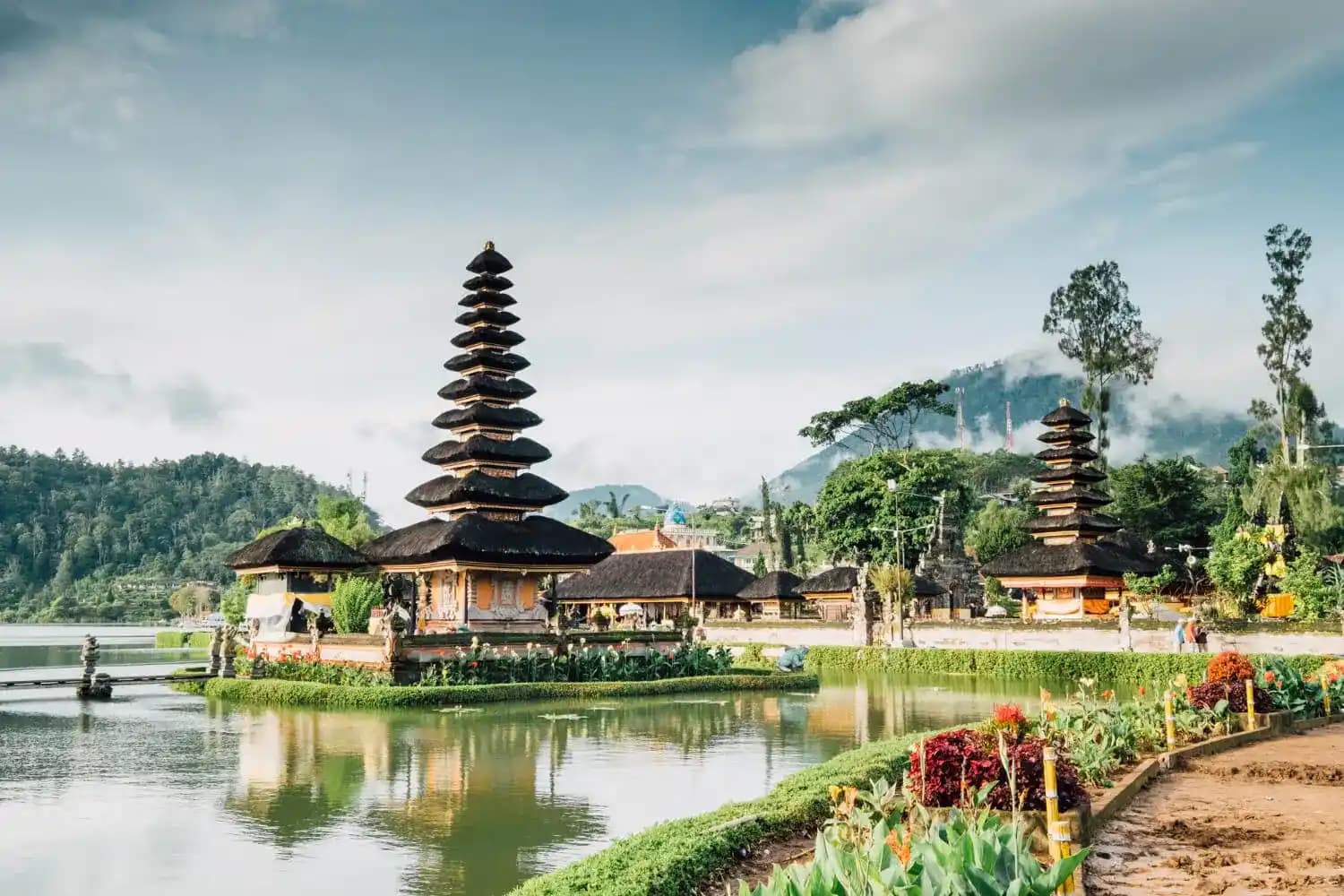

Colombo Travel Guide: Galle Face, Gangaramaya & Lotus Tower
Colombo, the bustling commercial capital of Sri Lanka, is a colourful collision of colonial-era architecture, ocean-facing promenades, gleaming new skyscrapers and centuries-old Buddhist temples. As the country's primary gateway, it offers travellers a vivid first taste of Sri Lankan culture — markets fragrant with cardamom and cinnamon, golden sunsets along Galle Face Green, and the unmistakable rumble of tuk-tuks weaving through Pettah's tangled lanes.
Explore Tweet World Travel Sri Lanka Small Group Tour or contact Tweet World Travel for a tailor-made travel experience.

History & Cultural Influence
Colombo's natural harbour drew Arab traders to its shores well over a thousand years ago, but it was the arrival of the Portuguese in 1505 — followed by the Dutch and finally the British — that shaped the city we see today. Each colonial power left an architectural fingerprint: Dutch hospitals, British clock towers, Portuguese forts and a fusion of cuisines that survives in Colombo's kitchens.
Today the city blends Sinhalese, Tamil, Muslim and Burgher heritage. Visitors will hear temple bells and the call to prayer within streets of one another, and find Buddhist viharas standing alongside Hindu kovils, mosques and churches.
Quick facts:
Population: around 750,000 (Greater Colombo: 5.6 million)
Languages: Sinhala, Tamil and widely-spoken English
Currency: Sri Lankan Rupee (LKR)
Time zone: IST (GMT+5:30)
Best for: first-day cultural orientation, shopping, food and ocean-side strolls
Top Attractions
A short tuk-tuk ride links Colombo's headline sights — a half-day is enough for an overview, but a full day rewards deeper exploration.
Gangaramaya Temple — one of Colombo's most photogenic Buddhist temples, set beside Beira Lake with a serene Seema Malaka pavilion floating on the water.
Lotus Tower — the 350m candy-pink spire that crowns the city's skyline; the observation deck delivers 360-degree views to the Indian Ocean.
Galle Face Green — a kilometre-long oceanfront promenade where locals fly kites, eat isso vadai (prawn fritters) and watch the sun drop into the sea.
Pettah Market — a maze of streets selling spices, saris, electronics and gem-stones; chaotic, colourful and essential.
Independence Memorial Hall — a stately pavilion built to commemorate Sri Lanka's 1948 independence, set in landscaped colonial-era gardens.
National Museum — a graceful 19th-century building housing the regalia of Sri Lanka's last Kandyan kings.

Must-Try Dishes
Sri Lankan food is bolder, hotter and more coconut-laced than its Indian cousin. Colombo is the best place to taste the country's greatest hits in one city.
Rice & curry — a plate of rice surrounded by 4–6 small curries (dhal, fish, jackfruit, pol sambol) and crispy papadums; the national meal.
Kottu roti — chopped flatbread stir-fried with egg, vegetables and meat on a hot iron griddle, served with a fiery gravy.
Hoppers (appa) — bowl-shaped pancakes with crispy edges and a soft middle; egg hoppers come with a soft yolk in the centre.
Lamprais — a Burgher specialty: rice and meat curries wrapped in a banana leaf and baked.
Watalappan — a coconut-jaggery custard scented with cardamom; Sri Lanka's signature dessert.

Festivals & Local Celebrations
Colombo celebrates a full Buddhist, Hindu, Muslim and Christian calendar — locals get more public holidays than almost anywhere on earth.
Sinhala & Tamil New Year (Avurudu) — April: traditional games, milk rice and family rituals mark the harvest new year.
Vesak — May: streets glow with paper lanterns and dansalas (free food stalls) during the Buddha's birthday.
Esala — July/August: though Kandy steals the spotlight, Colombo's temples host parallel processions and pujas.
Deepavali — October/November: lamps and rangoli colour Hindu neighbourhoods in Pettah and Wellawatte.
Galle Literary Festival fringe — January: authors and panels overflow from Galle into Colombo cafés and hotels.
What to Do
Beyond the headline temples and monuments, Colombo rewards travellers who slow down and follow the locals.
Take a tuk-tuk food tour through Pettah and Slave Island after dark.
Sip a sundowner on the rooftop of a Galle Road hotel as the lights along Galle Face come on.
Visit the Geoffrey Bawa house tour (No. 11, 33rd Lane) — the late architect's tropical-modernist home, open by appointment.
Take an early-morning fish-market walk at Negombo or Beira Lake.
Explore the Dutch Hospital Shopping Precinct for designer boutiques in 17th-century buildings.
Catch a cricket match at the R. Premadasa Stadium — the unofficial Sri Lankan religion.

Shopping
Colombo's retail scene mixes glitzy malls with chaotic bazaars and design-forward boutiques.
Odel & Barefoot — iconic Sri Lankan brands for handwoven textiles, ceramics and books.
Pettah Market — spices, saris, gemstones and gold along Sea Street and Main Street.
ONE Galle Face Mall — the city's newest air-conditioned mall with global brands and food courts.
Paradise Road — designer homewares and a beloved café-restaurant.
Laksala — the government craft emporium for masks, brass and lacquerware.
Weather: Best Time to Visit
December–March (Best): driest and coolest period; perfect for sightseeing, with sunny days around 27–30°C.
April: hot and humid, traditional New Year holidays — book ahead.
May–September: south-west monsoon brings short, heavy showers; mornings are usually clear.
October–November: inter-monsoon thunderstorms; humid but greener and quieter for travellers.
Cultural Etiquette
Dress modestly at temples — shoulders and knees covered; remove shoes and hats before entering.
Never pose with your back to a Buddha statue; this is considered deeply disrespectful.
Greet locals with palms together at chest height and a slight nod — say "ayubowan" (Sinhala) or "vanakkam" (Tamil).
Eat with the right hand if you join a traditional meal; the left hand is considered unclean.
Public displays of affection are uncommon — keep it discreet.
Essential Travel Information
Getting around: Tuk-tuks are the easiest way around Colombo — insist on the meter or use the PickMe app (Sri Lanka's Uber equivalent) for fixed-fare rides. The new Light Rail Transit is under construction; until then, taxis and ride-hailing are the smoothest option for visitors.
Money: ATMs are widespread and accept international cards; carry small rupee notes for tuk-tuks and market stalls. Cards are accepted at hotels, malls and mid-range restaurants.
Connectivity: Buy a local SIM (Dialog or Mobitel) on arrival at Bandaranaike International Airport — packages with 20–30 GB of data are inexpensive. Wi-Fi is reliable in most hotels and cafés.
Safety: Colombo is generally very safe; standard urban precautions apply — watch your belongings in crowded markets, and use registered taxis after dark.
Where to Stay
Colombo's hotel scene spans heritage colonial-era classics, sleek skyscrapers and design-led boutiques.
Luxury heritage — Galle Face Hotel (1864), the grand dame of the seafront.
Contemporary luxury — Shangri-La, Cinnamon Grand and the Kingsbury, all on or near the oceanfront.
Boutique design — Uga Residence, Maniumpathy and Number 11 (a Geoffrey Bawa stay).
Mid-range — Cinnamon Red, Granbell Hotel and a host of new four-star options around Union Place.
Best neighbourhoods — Galle Face for the ocean; Cinnamon Gardens (Colombo 7) for leafy embassies; Fort & Pettah for heritage and street life.
Explore Tweet World Travel Sri Lanka Small Group Tour or contact Tweet World Travel for a tailor-made travel experience.
Frequently Asked Questions
Quick answers to the questions travellers ask most often before visiting Colombo.
How many days should I spend in Colombo?
Two days is enough to see the headline sights, eat well and feel the city's rhythm. Many tours use Colombo as the arrival or departure hub with a single overnight, but adding an extra day rewards food-lovers and architecture fans.
Is Colombo worth visiting on a Sri Lanka tour?
Absolutely. Colombo is the country's cultural and culinary capital — a gentle introduction to Sri Lankan flavours, languages and Buddhist–Hindu–Muslim–Christian co-existence before you head into the Cultural Triangle or hill country.
How do I get from the airport to Colombo?
Bandaranaike International Airport (CMB) is about 35 km from central Colombo, an hour by expressway. Pre-booked hotel transfers, the PickMe app or metered taxis are the easiest options. Avoid touts at the arrivals hall.
Is Colombo safe for solo travellers and families?
Yes — Sri Lanka is one of South Asia's safest destinations. Solo women, families and senior travellers all find Colombo welcoming. Standard urban awareness (mind your belongings in markets, avoid empty streets after midnight) is enough.
What's the best time to visit Colombo?
December to March offers the driest, coolest weather. April brings the Sinhala/Tamil New Year holiday — busy but festive. May–September is wetter due to the south-west monsoon but rain is usually brief.
Our Best-Selling Tours
Follow Us