Hanoi Travel Guide: Old Quarter, Hoan Kiem & Vietnam's Capital
Hanoi is Vietnam's thousand-year-old capital — a French-colonial-meets-Imperial-Citadel city wrapped around the legendary Hoan Kiem Lake. Pho is invented here. Egg coffee was born here. The Old Quarter's 36 craft streets have been trading since the 13th century, and the Temple of Literature is Vietnam's first university (1070 AD). With UNESCO World Heritage Halong Bay 2½ hours away and Ninh Binh's karsts just south, Hanoi is the perfect first-time gateway to Vietnam.
Explore Tweet World Travel Vietnam Small Group Tour or contact Tweet World Travel for a tailor-made travel experience.
History & Cultural Influence
Hanoi has been the political and cultural heart of northern Vietnam for over a thousand years, founded as Thang Long (Ascending Dragon) in 1010 AD. The city's layered history is visible in its architecture — Confucian pagodas of the Ly Dynasty, the Imperial Citadel of Thang Long (a UNESCO World Heritage Site), 19th-century French colonial boulevards lined with tree-shaded villas, and Soviet-era monumentality at the Ho Chi Minh Mausoleum. The 2010 millennium celebrations marked 1,000 years of Hanoi as Vietnam's capital and triggered a wave of restoration across the city.
Quick facts:
Population: ~8.5 million (urban)
Founded: 1010 AD as Thang Long — the imperial capital of Vietnam
UNESCO Sites: Imperial Citadel of Thang Long
Signature landmarks: Hoan Kiem Lake, Old Quarter, Temple of Literature, Ho Chi Minh Mausoleum, Train Street
Best for: first-time Vietnam travellers, street food, French-Asian architecture, gateway to Halong Bay and Sapa
Top Attractions in Hanoi
Most of Hanoi's headline sights cluster around Hoan Kiem Lake and the Old Quarter, with Ba Dinh Square (the Ho Chi Minh Mausoleum complex) a 15-minute taxi ride west.
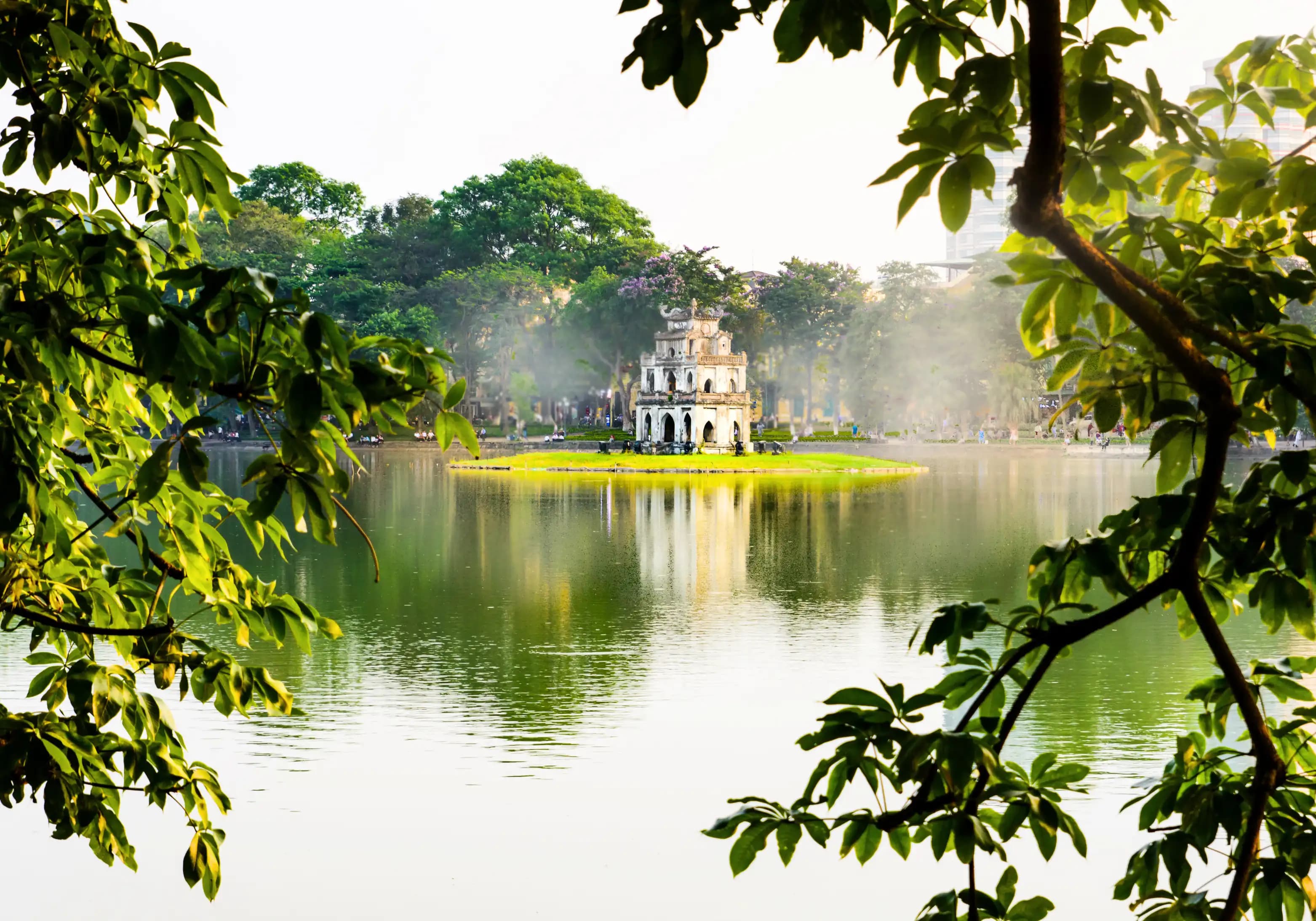
Hoan Kiem Lake & Ngoc Son Temple — the 'Lake of the Restored Sword' is Hanoi's spiritual heart; cross the vermilion Huc Bridge to Ngoc Son Temple on its small island and pose with the iconic Turtle Tower.
Hanoi Old Quarter (36 Streets) — a labyrinth of medieval craft streets — Hang Bac (silver), Hang Gai (silk), Hang Be (bamboo) — packed with street-food stalls, pho shops and shophouse cafés.
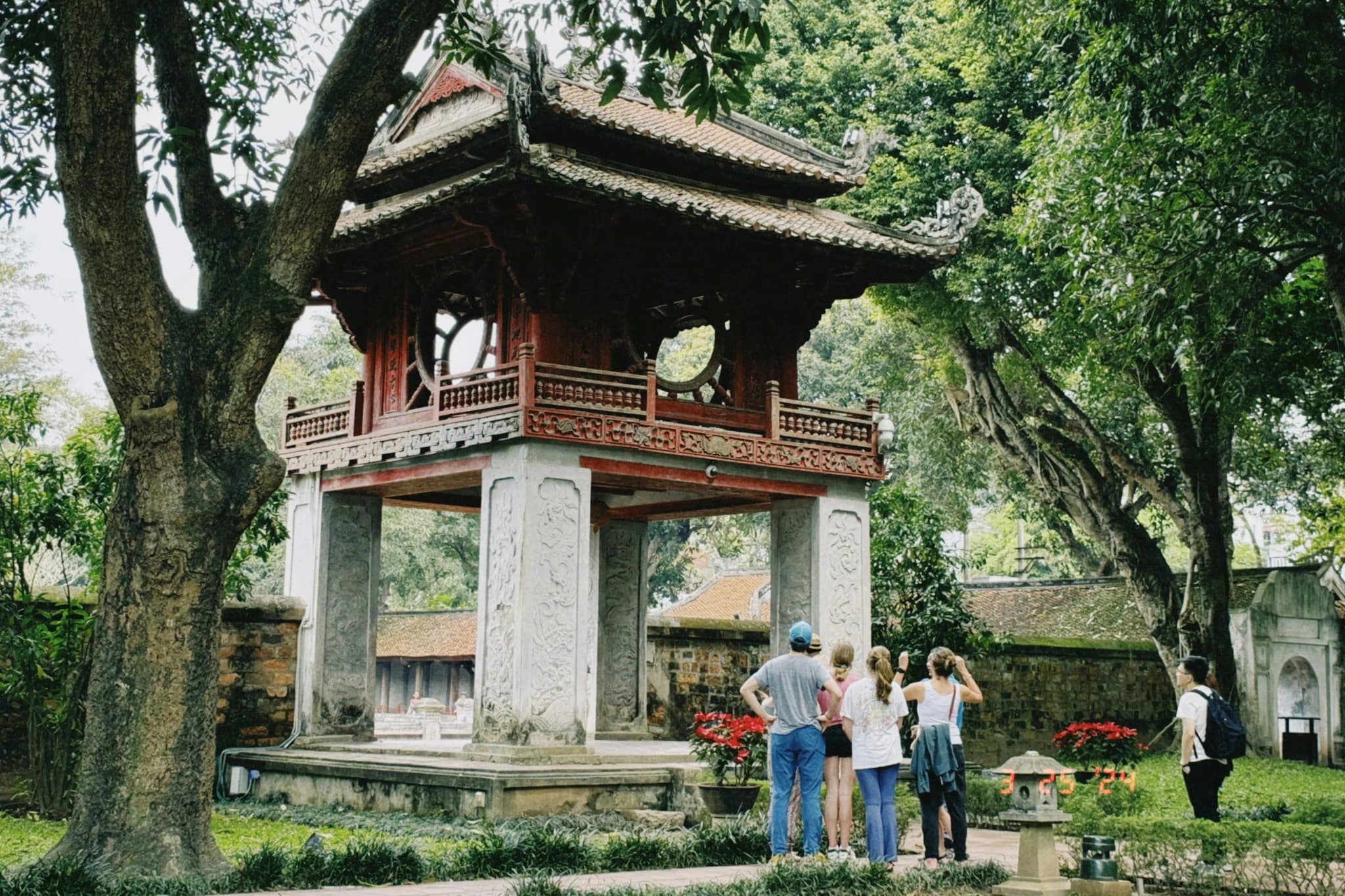
Temple of Literature — Vietnam's first university (1070 AD); five tranquil courtyards, the 82 stone-tablet doctors' steles and Confucian altars.
Ho Chi Minh Mausoleum & Presidential Palace — pay respects at the embalmed leader's marble tomb (open mornings, dress modestly), then walk to the stilt house and One Pillar Pagoda.
Imperial Citadel of Thang Long — UNESCO-listed royal citadel; entry ¥30,000 dong, open daily 8–5.
Hoa Lo Prison Museum ('Hanoi Hilton') — sobering exhibits on French colonial rule and the Vietnam War POW story.
Hanoi Train Street — a narrow residential lane where trains pass within inches of coffee shops; check official train timetables and respect the safety barriers (re-opened to visitors via licensed cafés in 2024).
West Lake (Ho Tay) & Tran Quoc Pagoda — the city's biggest freshwater lake; cycle the 17 km perimeter and stop at Vietnam's oldest pagoda.

Must-Try Dishes in Hanoi
Hanoi is one of Asia's great street-food capitals. Many of Vietnam's most famous dishes were invented here.
Pho — Vietnam's national dish was born in early-20th-century Hanoi; clear beef-bone broth, flat rice noodles, herbs and beef. Try Pho Bat Dan, Pho Thin, or Pho Gia Truyen for the classic morning bowl.
Bun cha — charcoal-grilled pork patties, vermicelli, herbs and dipping sauce; made world-famous by the 2016 Obama–Bourdain dinner at Bun Cha Huong Lien.
Banh mi — French-Vietnamese baguette stuffed with pate, pickles, cilantro and grilled meat. Banh Mi 25 in the Old Quarter is a tourist classic.
Cha ca — turmeric-marinated fish grilled with dill and spring onion at the table, served with vermicelli, peanuts and shrimp paste. Cha Ca La Vong is the originator.
Egg coffee (ca phe trung) — Hanoi's signature drink: whipped egg-yolk-and-condensed-milk meringue over strong Vietnamese coffee. Try Giang Cafe (the original, founded 1946).
Bun bo Nam Bo — a southern bun (vermicelli) dish that's beloved in Hanoi: cold noodles, beef stir-fry, peanuts and herbs.
Pho cuon — fresh, soft rice rolls of beef and herbs — a West Lake speciality and the perfect snack on a hot day.

Festivals & Local Celebrations
Hanoi's calendar runs on the lunar cycle — most of its biggest events fall around Tet (Lunar New Year) and the Mid-Autumn Festival.
Tet Nguyen Dan / Lunar New Year (late Jan – mid Feb) — Vietnam's most important holiday: kumquat-tree markets, dragon dances and family reunions. Many businesses close for the first 3 days.
Tet Trung Thu / Mid-Autumn Festival (mid-September) — children parade colourful lanterns and eat mooncakes; the Old Quarter's Hang Ma street is a sea of paper lanterns.
Perfume Pagoda Festival (Feb – Mar) — Vietnam's largest pilgrimage festival in the Huong Tich mountains, 60 km from Hanoi.
Hanoi Flower Festival (early Tet) — outdoor floral displays around Hoan Kiem Lake and at Thang Long Imperial Citadel.
Reunification Day (30 April) & May Day (1 May) — public holidays with parades and fireworks across Ba Dinh Square.
Hanoi Liberation Day (10 October) — the city's birthday; reenactments and concerts mark the 1954 French departure.
What to Do in Hanoi
Beyond the headline sights, Hanoi rewards travellers who slow down and immerse themselves in everyday street culture.
Water puppet show at Thang Long Theatre — a uniquely Vietnamese folk art performed knee-deep in water, with live traditional music. 50-minute show, multiple sessions daily.
Cooking class — most classes start with a market tour, then prepare pho, fresh spring rolls and banana-flower salad. Hanoi Cooking Centre and Apron Up are favourites.
Cyclo tour of the Old Quarter — 1-hour ride through the 36 craft streets, ideal at sunset.
Cycle West Lake (Ho Tay) — the 17 km loop passes Tran Quoc Pagoda, Quan Thanh Temple and flower farms.
Day trip to Halong Bay — Vietnam's UNESCO-listed natural wonder, 2½ hours by expressway; choose a day cruise or overnight junk-boat.
Day trip to Ninh Binh — 'Halong Bay on land' — sampan rides through limestone karsts at Tam Coc or Trang An, plus the ancient capital Hoa Lu.
Day trip to Bat Trang Ceramic Village — 14 km from Hanoi; try a pottery wheel and stock up on Vietnamese ceramic souvenirs.

Shopping in Hanoi
Hanoi blends ancient craft streets with French-style boulevards and modern malls. Bargaining is expected at markets, not in boutiques.
Dong Xuan Market — Hanoi's largest indoor market, 4 storeys, near the northern Old Quarter. Wholesale clothing, fabrics, lacquerware, snacks.
Hang Gai Street (Silk Street) — boutique silk tailors and embroidery houses; allow 24 hours for a custom ao dai dress.
Hanoi Night Market (Hang Dao Street) — open Fri–Sun evenings; runs the length of the Old Quarter with food, fashion and souvenirs.
Trang Tien Plaza — Hanoi's heritage department store on the corner of Hoan Kiem Lake; luxury brands and a basement food hall.
Lotte Center & Aeon Mall Long Bien — modern malls for fashion, electronics and family days.
Souvenirs to buy — silk scarves, lacquerware, Hmong textiles, Bat Trang ceramics, Vietnamese coffee, lotus tea.
Weather in Hanoi: Best Time to Visit
Hanoi has four distinct seasons — surprising for a tropical country. Autumn and spring are the most rewarding for first-time travellers.
Spring (Mar – Apr) — mild (17–23°C); light drizzle, flowers in bloom. One of the two best times to visit.
Summer (May – Aug) — hot, humid (25–35°C); afternoon thunderstorms. Best for indoor cultural activities and cooler day trips to Sapa or Halong Bay.
Autumn (Sep – Nov) — comfortable (20–28°C); clear skies and dry days — the peak season, and the most photogenic time of year.
Winter (Dec – Feb) — cool and damp (10–20°C); fewer crowds, ideal for street-food crawls. Tet (Lunar New Year) usually falls in late January or early February.
Cultural Etiquette in Hanoi
Vietnamese culture values respect, modesty and warmth. A few simple courtesies go a long way.
Dress modestly at temples & pagodas — cover shoulders and knees; remove shoes at temple inner halls.
Respect elders — use polite Vietnamese 'da' (yes) and 'cam on' (thank you); a small bow is appreciated.
Bargain politely — at markets, smile and start at 50–60% of the asking price. Walk away gracefully if you can't agree.
No public displays of affection — Vietnamese culture is reserved about physical contact in public.
Chopstick etiquette — never stick them upright in rice (resembles funeral incense).
Photography — always ask before photographing locals, especially at temples and rural markets.
Essential Travel Information
Getting around — Hanoi's compact centre is best explored on foot — most Old Quarter sights are within a 10-minute walk of Hoan Kiem Lake. For longer trips, the Grab app provides on-demand cars and motorbike taxis with transparent pricing. Local buses are cheap (¥7,000–10,000 dong) but slow; the Hanoi Metro Line 2A is open with Line 3 partially open (Nhon to Cau Giay) since 2024. Cyclos are tourist-priced and best taken with a fixed fare. Day trips to Halong Bay, Ninh Binh, Sapa and Mai Chau are easiest with a private driver-and-guide or a tour shuttle.
Money — Vietnam runs on the dong (¥) — credit cards accepted at hotels, malls and mid-to-upper restaurants, but small shops, street food and markets are cash-only. ATMs widely available; HSBC, Standard Chartered and ACB give the best rates for international cards. Carry ¥500,000–1,000,000 dong daily (approx US$20–40).
Connectivity — Free Wi-Fi is excellent in cafés and hotels. A travel eSIM (Airalo, Ubigi) or a local Vietnam SIM (Vinaphone, Viettel) is the easiest way to stay online — both offer cheap unlimited data.
Where to Stay in Hanoi
For first-timers, the Old Quarter and Hoan Kiem are the most convenient bases — walking distance to most attractions and the heart of the food scene.
Accommodation categories
Luxury — Sofitel Legend Metropole Hanoi (the city's historic 1901 grande dame), Capella Hanoi, Four Seasons Hanoi (opened 2024), InterContinental Hanoi Westlake.
Boutique & heritage — La Siesta Premium Hang Be, Hanoi La Castela Hotel, Apricot Hotel (overlooking Hoan Kiem Lake), Hanoi Pearl Hotel.
Mid-range — La Sinfonia Del Rey Hotel, Hanoi Tirant Hotel, Hanoi Boutique Hotel & Spa, Hanoi Backpackers Hostel (private rooms).
Budget — Hanoi Old Quarter homestays from US$15, Hanoi Friends Inn, Hanoi Buddy Inn, Old Quarter Hostel.
Best neighbourhoods for first-timers:
Old Quarter (Hoan Kiem District) — best for first-timers: walking distance to the lake, food, nightlife and most attractions.
French Quarter (south of the lake) — colonial villas, embassies, the Opera House and Sofitel Metropole; quieter and more refined.
West Lake (Ho Tay / Tay Ho) — expat district, family-friendly hotels, lakeside cafés; 15 minutes from the centre.
Ba Dinh District — political quarter near the Mausoleum and Imperial Citadel; quieter for sightseeing-led stays.
Frequently Asked Questions
Here are the most common questions first-time travellers ask about Hanoi — quick answers to help plan your trip.
How many days do you need in Hanoi?
Three days is plenty for first-time visitors — day one for the Old Quarter, Hoan Kiem Lake, Train Street and a water puppet show; day two for the Temple of Literature, Ho Chi Minh Mausoleum and Imperial Citadel; day three for a cooking class, cyclo tour or West Lake bike ride. Add 1–2 nights for a Halong Bay overnight cruise or Ninh Binh day trip.
How do you get to Hanoi from Ho Chi Minh City?
Direct flights take 2 hours 10 minutes and run hourly throughout the day on Vietnam Airlines, Bamboo Airways, VietJet and Vietravel Airlines. The Reunification Express train takes 30+ hours and is best done in 2–3 segments via Da Nang and Hue. Most travellers fly between Hanoi and HCMC and take the train for shorter coastal legs.
What's the best way to get from Hanoi airport into the city?
Noi Bai International Airport is 45 minutes from the Old Quarter. Options: pre-book a hotel transfer (US$15–20), use Grab Car (¥350,000–450,000 dong, around US$15–18), or take the Bus 86 to Hanoi Old Quarter / Train Station (¥45,000 dong, 60–75 minutes). Taxi metres can be unreliable — Grab is safer for first-timers.
When is the best time to visit Hanoi?
October and November are the most popular months — dry, clear skies, around 24°C and ideal for both city sightseeing and day trips to Halong Bay or Ninh Binh. March and April are also excellent. Avoid June to August if you don't like hot, sticky weather and afternoon storms.
Is Hanoi safe for tourists?
Yes — Hanoi is generally very safe. The main risks are petty theft in crowded areas (Old Quarter, Train Street, Dong Xuan Market — keep bags zipped), overcharging at unmetered taxis (use Grab), and traffic (cross the road slowly and steadily, locals will flow around you). Solo female travellers report Hanoi as one of Asia's safest big cities.
Our Best-Selling Tours
Follow Us