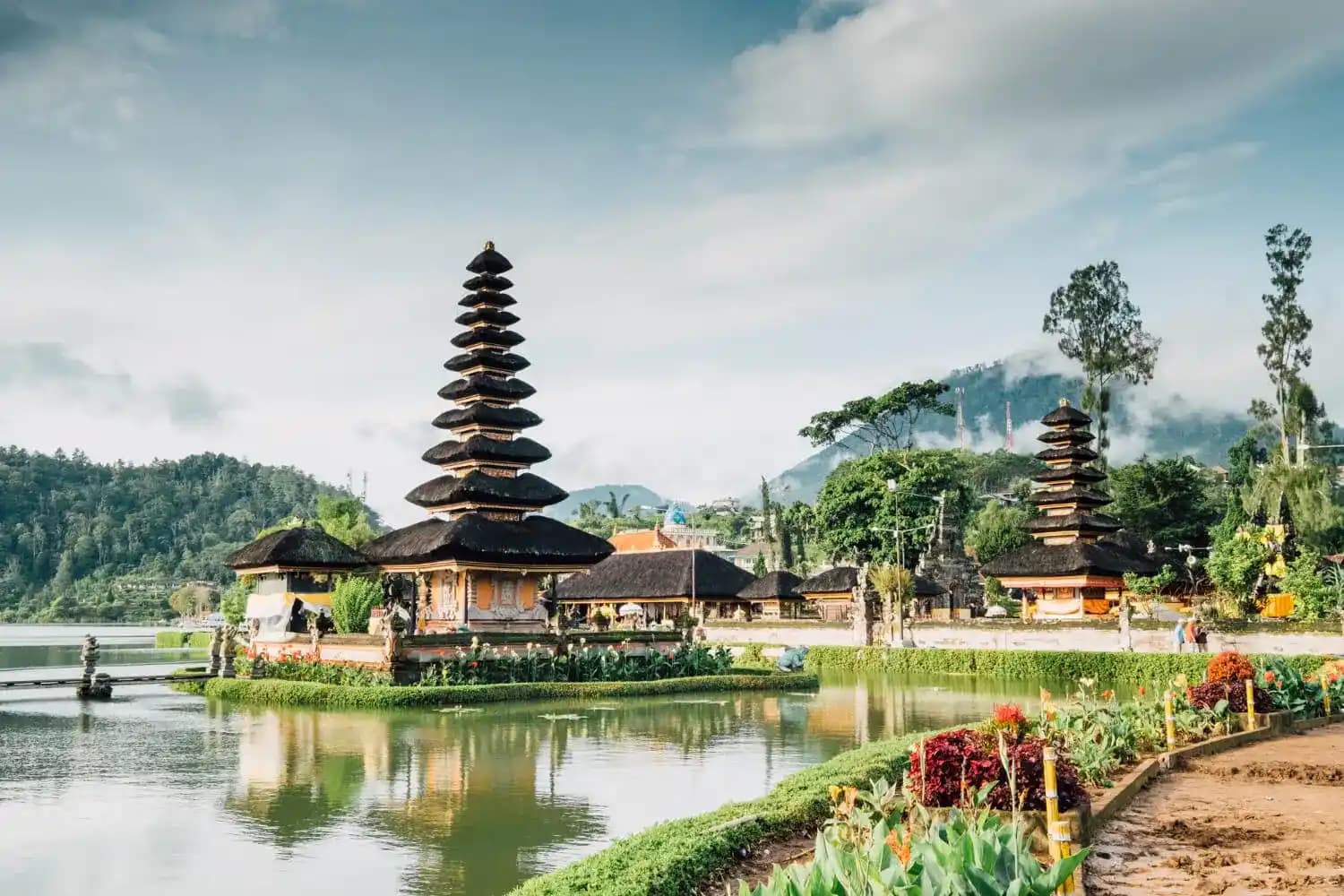

Hue Travel Guide: Imperial Citadel, Royal Tombs & Perfume River
Hue is Vietnam's imperial heart — the moat-encircled UNESCO-listed capital of the Nguyen Dynasty from 1802 to 1945, where 13 emperors once ruled inside the gilded halls of the Forbidden Purple City. Today the city is a slower, more reflective central-Vietnam stop between Hanoi and Hoi An, built around the gentle Perfume River. Visit the Citadel, cruise to Thien Mu Pagoda, explore the elaborately decorated royal tombs scattered through the hills, and feast on bun bo Hue — Vietnam's spiciest, most aromatic noodle soup.
Explore Tweet World Travel Vietnam Small Group Tour or contact Tweet World Travel for a tailor-made travel experience.

History & Cultural Influence
Hue was Vietnam's imperial capital from 1802 to 1945 under the Nguyen Dynasty — the last royal house of Vietnam. Modelled on Beijing's Forbidden City but with a distinctly Vietnamese soul, the moat-encircled Imperial Citadel was the residence of 13 emperors and the spiritual heart of a nation. Although heavily damaged during the Battle of Hue in 1968, the citadel and the Royal Tombs scattered along the Perfume River were inscribed by UNESCO as a World Heritage Site in 1993, and ongoing restoration continues today. Hue's refined imperial cuisine, classical court music (nha nhac, also UNESCO-listed) and unique dialect set it apart from anywhere else in Vietnam.
Quick facts:
Population: ~650,000 (Thua Thien-Hue Province), ~350,000 (Hue city proper)
Imperial capital: 1802–1945, seat of the Nguyen Dynasty
UNESCO sites: Complex of Hue Monuments (1993); Royal Court Music (2003)
Signature landmarks: Imperial Citadel, Thien Mu Pagoda, Royal Tombs, Perfume River
From Hanoi: 1 hr 20 min by direct flight; 14 hours by Reunification Express train
Top Attractions in Hue
Most of Hue's headline sights lie within a 10 km radius of the Imperial Citadel, along the gentle bend of the Perfume River (Song Huong).
Imperial City (Citadel) of Hue — the 2.5 km-walled UNESCO World Heritage complex; visit the Ngo Mon Gate, Thai Hoa Palace and Forbidden Purple City. Allow 3 hours.
Thien Mu Pagoda — the iconic 7-storey Phuoc Duyen Tower above the Perfume River; Vietnam's tallest pagoda and a still-active Buddhist monastery.
Tomb of Emperor Khai Dinh — the most flamboyant of the royal tombs; 127 steps lead up to a chamber covered in glass-and-ceramic mosaics.
Tomb of Emperor Tu Duc — the most poetic, set in a forested park; the emperor read poetry on Luu Khiem Lake from his Xung Khiem pavilion.
Tomb of Emperor Minh Mang — the most architecturally harmonious; classical Chinese-Confucian gardens, pavilions and lotus ponds across an island.
Dong Ba Market — Hue's central market dating to 1899; the spiritual home of bun bo Hue and Hue street snacks.
Perfume River boat cruise (Song Huong) — wooden dragon-boat tours run between An Cuu and Hen Island; sunset cruises are the most atmospheric.
Hue Walking Street & Riverside Walking Street (weekends) — closed-traffic strolling, food stalls and live performances Fri-Sun evenings.

Must-Try Dishes in Hue
Hue's imperial heritage gave Vietnam its most refined regional cuisine — said to have 1,300+ traditional Hue dishes. Most are small, spicy and flavour-packed.
Bun bo Hue — Hue's iconic dish: lemongrass-chili beef-bone broth, thick round rice noodles, beef shank and pork knuckle. Bun Bo Hue Ba Tuyet on Le Loi Street is a classic.
Banh khoai — crispy yellow rice-flour pancakes stuffed with shrimp, pork and bean sprouts, served with peanut-sesame sauce.
Com hen (clam rice) — chilled rice mixed with tiny river clams, peanuts, crispy pork rind and a spicy broth; eaten cold and best in the morning.
Banh beo (water-fern cake) — bite-sized steamed rice cakes topped with dried shrimp and crispy pork; eaten with a sauce-spoon, six to ten cakes per plate.
Banh bot loc (clear shrimp dumplings) — chewy tapioca dumplings filled with shrimp and pork belly, served with fish-sauce-chili dip.
Banh nam (flat steamed cake) — banana-leaf-wrapped flat rice cake topped with shrimp, dried shallot and a savoury sauce.
Che Hue (Hue sweet soups) — over 30 varieties of bean, jelly, fruit and coconut-milk sweet soups; a Hue street-corner classic.

Festivals & Local Celebrations
Hue's festival calendar centres on imperial reenactments, Buddhist pilgrimages and the famous biennial Hue Festival.
Hue Festival (April – June, biennial in even years) — Vietnam's biggest cultural festival; royal court ceremonies, traditional Tuong opera and international cultural exchanges across the city.
Hue Traditional Craft Festival (every odd year) — celebrates Hue's traditional villages — pottery, paper flowers, bamboo, conical hats.
Perfume River Boat Festival (summer) — illuminated dragon-boats parade with live nha nhac (royal court music) performances.
Imperial City Day (10 February) — reenactments of Nguyen-era ceremonies inside the Citadel; free entry on the anniversary.
Mid-Autumn Festival / Tet Trung Thu (mid-September) — children's lantern processions and mooncake-sharing throughout the Old Town.
Buddha's Birthday (8th day of 4th lunar month) — lanterns float on the Perfume River; processions converge at Thien Mu Pagoda.
What to Do in Hue
Pair the citadel and tomb sightseeing with at least one slow Perfume River cruise and a Hue cooking class.
Cycle the Royal Tombs route — a 20 km loop south of Hue links Tu Duc, Minh Mang and Khai Dinh tombs; do it as a guided bike day.
Perfume River cruise — 2-hour wooden dragon-boat tours visit Thien Mu Pagoda and Hon Chen Temple; sunset cruises are unmissable.
Hue cooking class — Y Thao Garden Restaurant, Maison Trang and many homestays run market-to-table classes featuring Hue's six classic dishes.
Nha nhac royal court music performance — UNESCO-listed; nightly at Duyet Thi Duong inside the Citadel and at Sông Hương theatre.
Visit a conical hat village — Phu Cam village south of Hue has been making poem-imprinted Hue conical hats for 300 years; workshops welcome visitors.
Day trip to the DMZ — the Vinh Moc tunnels and Hien Luong Bridge — Vietnam War history sites 80 km north of Hue.
Day trip to Phong Nha-Ke Bang — UNESCO-listed karst caves (Paradise Cave, Phong Nha Cave) are 4 hours north; doable as a long day or overnight.

Shopping in Hue
Hue's shopping is craft-led — conical hats, embroidery, lotus tea and the city's distinctive purple ao dai.
Dong Ba Market — Hue's 1899-founded central market; the best stop for Hue snacks, conical hats and traditional crafts. Bargaining expected.
Hue Walking Streets (Pham Ngu Lao, Chu Van An, Vo Thi Sau) — closed-traffic Fri-Sun evenings; street-food stalls, souvenir vendors, live music.
Phu Cam Conical Hat Village — 30 minutes from central Hue; the traditional 'poem hat' workshops are open to visitors.
Thanh Tien Paper Flower Village — 10 km east; over 300 years of paper-flower making, the village blooms with colour during Tet.
Trang Tien Plaza & Vincom Plaza Hue — modern shopping centres for fashion, electronics and air-conditioned breaks.
Souvenirs to buy — Hue conical hats, lotus tea, royal-purple ao dai silk, traditional embroidery, sandalwood incense, Hue mè xửng (sesame candy).
Weather in Hue: Best Time to Visit
Hue has a tropical monsoon climate with distinct dry and wet seasons. February to August are the most reliable months; September to January are the wettest.
Spring (Feb – Apr) — mild (20–25°C), low humidity. The most popular season for the Hue Festival and outdoor sightseeing.
Summer (May – Aug) — hot (28–35°C), occasional rain storms. Best for early-morning citadel visits and sunset river cruises.
Autumn (Sep – Oct) — moderate (24–28°C), increasing rainfall as the monsoon arrives; one of the wetter periods.
Winter (Nov – Jan) — cool (15–20°C), heaviest rainfall November-December. Quietest at the tombs and dramatic at Thien Mu Pagoda but pack a waterproof.
Cultural Etiquette in Hue
Hue's imperial heritage and strong Confucian traditions mean local courtesies carry more weight here than in Hanoi or Ho Chi Minh City.
Dress modestly — at the Citadel, royal tombs and pagodas; cover shoulders and knees, remove hats inside temples.
Bow at altars — a small bow at family altars and ancestral tablets shows respect for Hue's strong ancestor traditions.
Quiet voices at temples & tombs — many sites still function as active places of worship and remembrance.
Ask before photographing — particularly in markets and traditional craft villages; offer a small purchase as a polite exchange.
No public displays of affection — Hue is more conservative than Vietnam's big cities.
Bargain politely at Dong Ba Market — smile, halve the asking price, walk away with grace if you can't agree.
Essential Travel Information
Getting around — Hue is compact and easily walkable on either side of the Perfume River — the Citadel sits on the north bank, hotels and most restaurants on the south. Cyclos are a tourist classic, motorbike taxis (xe om) are the cheapest, and the Grab app provides cars and bikes with transparent pricing. For the Royal Tombs, hire a private car for a half-day (~US$25–30) or join a tomb tour (~US$15–20). Hue airport (Phu Bai, 15 km south) connects to Hanoi and Ho Chi Minh City; the Reunification Express train runs to Da Nang (2 hr 30 min, one of the world's most scenic rail journeys).
Money — International-friendly ATMs are widely available; credit cards work at hotels, mid-range restaurants and tourist sites. Smaller eateries, markets and cyclo rides are cash-only. Carry ¥500,000–1,000,000 dong daily.
Connectivity — Free Wi-Fi is reliable at hotels and cafés. A travel eSIM or local Vietnam SIM (Viettel, Vinaphone) covers Hue and the surrounding tombs and pagodas easily.
Where to Stay in Hue
Most travellers stay along the south bank of the Perfume River — walking distance to riverfront restaurants and the Citadel via Trang Tien Bridge.
Accommodation categories
Luxury — Pilgrimage Village Boutique Resort & Spa, Banyan Tree Lang Co (60 min south), La Residence Hue Hotel & Spa (a colonial-era riverfront classic), Azerai La Residence Hue.
Boutique & heritage — Indochine Palace, Ancient Hue Garden Houses, Eldora Hotel Hue, EMM Hotel Hue.
Mid-range — Romance Hotel Hue, Saigon Morin Hotel (1901 landmark), Hue Serene Palace Hotel, Asia Hotel Hue.
Budget — Hue Backpackers Hostel, Why Not Hostel, Friendly Hotel; many homestays in the lanes north of the Citadel.
Best neighbourhoods for first-timers:
South bank (Le Loi & Pham Ngu Lao area) — best for first-timers: walking distance to riverside dining and the Trang Tien Bridge to the Citadel.
Hue Walking Street (Pham Ngu Lao / Chu Van An / Vo Thi Sau) — best for night-time atmosphere: Fri–Sun car-free street parties.
North bank (near Citadel) — quieter, more local; closer to morning citadel openings and Dong Ba Market.
Riverside resorts (out of centre) — best for full-service relaxation; book a hotel shuttle for sightseeing days.
Frequently Asked Questions
Here are the most common questions first-time travellers ask about Hue — quick answers to help plan your trip.
How many days do you need in Hue?
Two to three days is ideal — one day for the Imperial Citadel and Dong Ba Market, one day for the Royal Tombs and a Perfume River cruise, and a half-day for a cooking class or DMZ day trip. Many travellers also use Hue as the launchpad for the legendary Hai Van Pass scenic drive south to Da Nang and Hoi An.
How do I get from Hanoi to Hue?
Direct flights take 1 hour 20 minutes (Vietnam Airlines, Bamboo Airways, VietJet) and run several times daily into Phu Bai Airport. The Reunification Express train takes 13–14 hours overnight; the sleeper berth is a memorable Vietnam experience, particularly the dawn run along the central coast. Overnight buses are cheapest but slowest (12–13 hours).
Is Hue worth visiting?
Absolutely — Hue is Vietnam's most concentrated dose of imperial history and refined regional cuisine. The UNESCO Citadel, Royal Tombs and Thien Mu Pagoda are unmissable. The city is also a quieter, slower contrast to the bustle of Hanoi and Ho Chi Minh City, making it a perfect mid-trip pause.
When is the best time to visit Hue?
February to April is the most reliable — mild weather, dry days, the Hue Festival in even years. May to August is hot but mostly dry. September to January brings the wet monsoon — pack a waterproof and reschedule cruise plans for sunny windows.
What's the difference between Hue and Hoi An?
Hue is the imperial capital with grand citadel and royal-tomb architecture, refined court cuisine and strong Buddhist heritage. Hoi An (3 hours south) is a UNESCO-listed merchant trading port with lanterns, tailors, beaches and a cosier old town. Most central Vietnam itineraries combine both — Hue for history, Hoi An for atmosphere.
Our Best-Selling Tours
Follow Us